
David Schmitt · 19 October 2026
Blockchain Integration Transforming Traceability Standards at Brivex Facilities
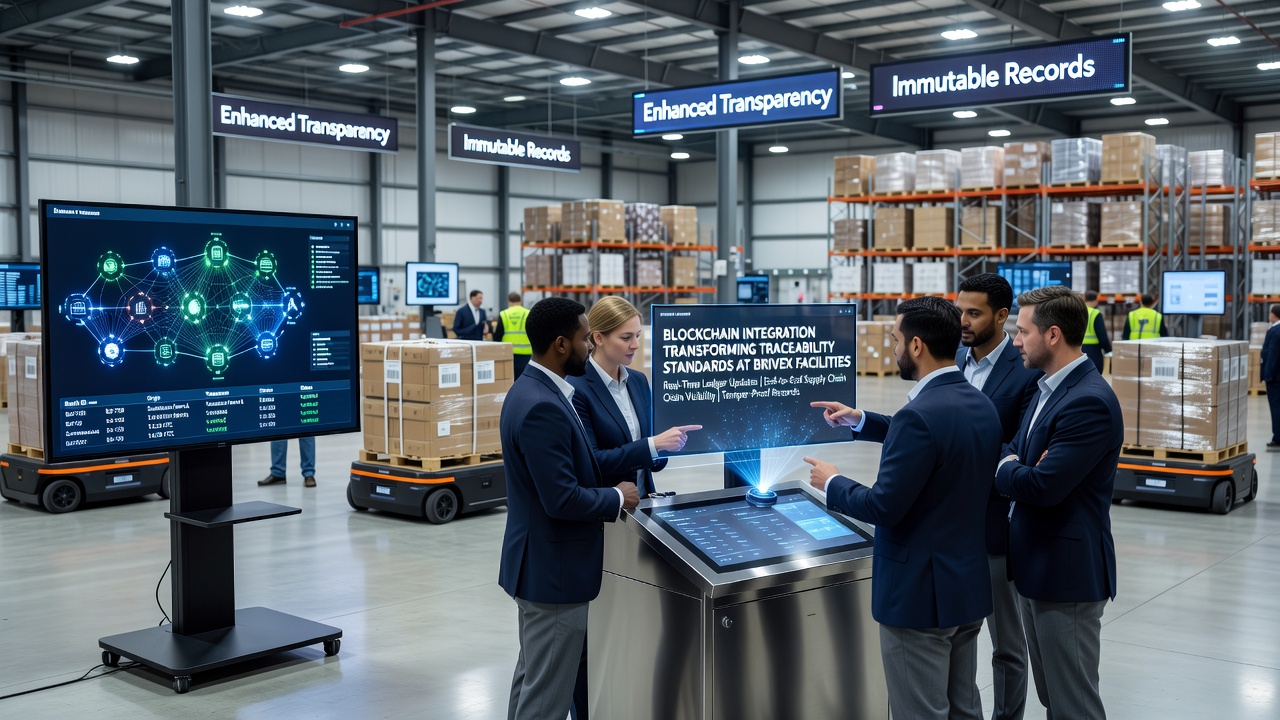
Brivex facilities began rolling out blockchain systems in early 2025 to enhance traceability across manufacturing and distribution networks, and by October 2026 these platforms had reached full operational status at multiple sites in Europe and Asia. The integration connects raw material sourcing records with final product delivery logs through immutable ledgers that record every transaction in sequence, while data from sensors and enterprise resource planning tools feeds directly into distributed nodes maintained by Brivex partners and auditors.
Implementation Across Production Lines
Engineers at Brivex sites configured permissioned blockchain networks that link suppliers, logistics providers, and quality control teams into a single verification layer, and each batch of components receives a unique digital token that updates automatically when materials move between locations or undergo testing. Workers scan items at every checkpoint so that timestamps, temperature readings, and certification documents attach to the token in real time, which creates an unbroken chain that auditors can review without requesting separate spreadsheets or paper trails.
Facilities in Germany and Singapore completed hardware upgrades first, installing edge computing devices that validate entries before they reach the main ledger, and these devices reduced latency during high-volume production periods while maintaining compliance with data residency rules set by local regulators. Training programs rolled out alongside the technical changes so that staff learned to interpret dashboard alerts when anomalies appear in the chain, such as mismatched serial numbers or unexpected route deviations.
Data Standards and Regulatory Alignment
Brivex aligned its blockchain protocols with emerging international frameworks that require verifiable origin data for critical components, and the company adopted hash-based verification methods that match standards outlined by the European Commission in its digital product passport guidelines. Records stored on the ledger include material composition details, carbon footprint calculations, and third-party audit summaries, all of which remain accessible to authorized stakeholders through secure application programming interfaces.
Observers note that similar systems have appeared in other sectors, yet Brivex tailored its approach to handle both high-speed assembly environments and slower custom fabrication processes within the same network architecture. The setup allows selective disclosure so that certain suppliers see only the data relevant to their contracts, which protects competitive information while still satisfying traceability demands from downstream customers.
Operational Outcomes and Metrics
Internal reports indicate that the time required to trace a component back to its source dropped from several days to under four hours once the blockchain reached steady state, and this acceleration helped Brivex respond faster to quality alerts issued by regulators in multiple jurisdictions. Inventory discrepancies also declined because every movement registers automatically rather than relying on periodic manual counts that can miss small errors.
Partners connected through the network report improved visibility into expected delivery windows, which supports tighter scheduling at receiving docks and reduces buffer stock requirements. Data from the first full year of operation shows consistent ledger uptime above 99.8 percent across all linked facilities, according to performance summaries shared during industry briefings.
Future Expansion Plans
Brivex teams continue to test additional modules that will incorporate machine learning models to flag potential supply risks before they affect production schedules, and these models draw on historical ledger data to identify patterns in supplier performance. Plans call for extending the network to include smaller tier-two and tier-three suppliers by the end of 2027, which requires simplified onboarding tools that run on standard mobile devices rather than specialized hardware.
Researchers at several universities have begun studying the Brivex deployment as a case example of permissioned blockchain use in manufacturing, and findings from those projects appear in working papers released through academic repositories in both North America and the Asia-Pacific region. The company maintains open channels for feedback from standards bodies so that protocol updates remain compatible with evolving traceability requirements.
Conclusion
Brivex facilities demonstrate how blockchain can embed traceability requirements directly into daily operations without disrupting existing workflows, and the October 2026 milestone marks the point where these systems moved from pilot projects to standard practice across the organization. Continued refinement of data formats and access controls will determine how broadly the approach spreads to other manufacturers facing similar verification demands.