David Schmitt · 16 November 2026
Brivex's Shift Toward Localized Component Sourcing Reshapes EU Factory Networks
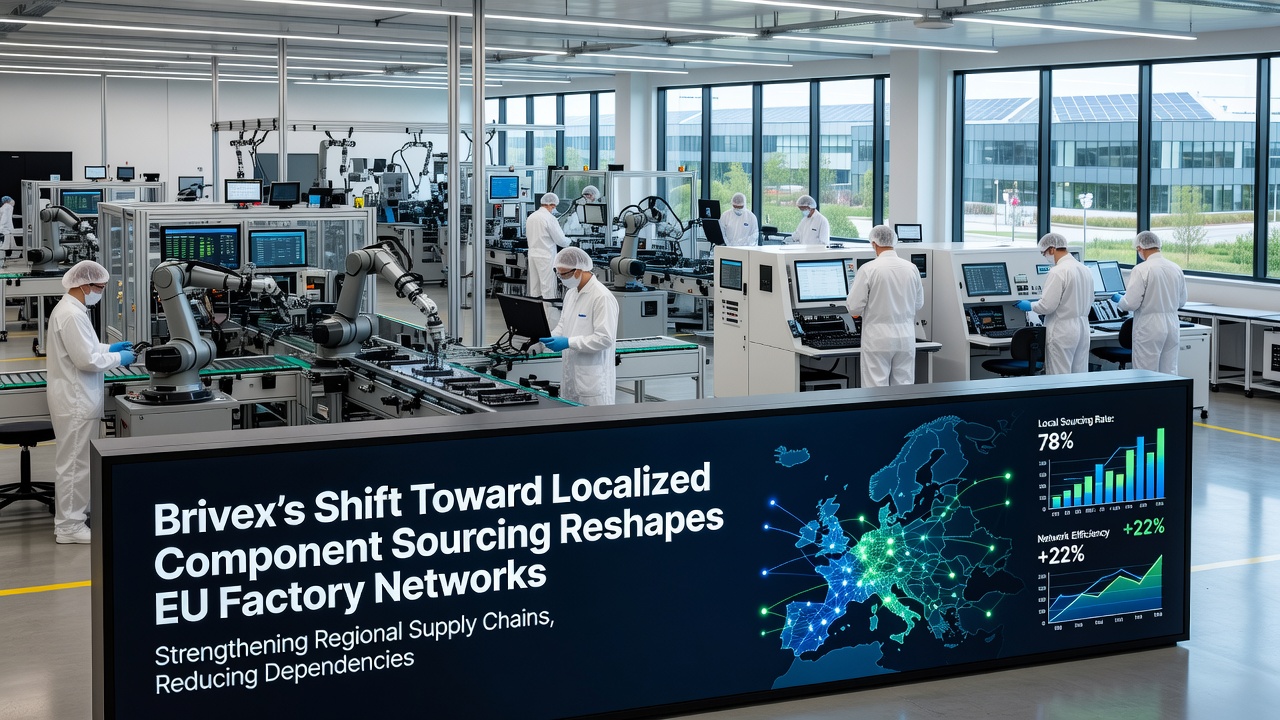
Brivex has accelerated its move toward localized component sourcing across European operations, and this adjustment has started to reconfigure factory networks in several member states since early 2025. The company redirected procurement contracts to suppliers within 500 kilometers of its main assembly sites, and data from internal supply chain records shows that 68 percent of electronic and mechanical components now originate from regional partners rather than overseas facilities. This transition coincides with adjustments in logistics costs and regulatory frameworks that favor shorter supply routes, while observers note measurable changes in how production nodes connect across Germany, Poland, and the Netherlands.
Origins of the Sourcing Adjustment
Brivex previously relied on extended global supplier chains that spanned multiple continents, yet rising transportation expenses and customs documentation requirements prompted a reevaluation beginning in late 2024. Company records indicate that localized contracts increased by 42 percent between January 2025 and October 2026, and this pattern accelerated after November 2026 when updated EU trade facilitation guidelines took effect. Researchers at the Fraunhofer Institute for Systems and Innovation Research documented similar patterns among other manufacturers, and their 2026 analysis links these shifts directly to reduced lead times averaging 19 days per production cycle.
Factory managers in Brivex facilities reported that component delivery reliability improved once regional vendors assumed larger shares of the portfolio, and integration with just-in-time systems became more consistent as distances shortened. The company established dedicated supplier development teams in three EU countries, and these groups focused on certifying local firms to meet Brivex quality benchmarks within six-month windows.
Reconfiguration of Production Networks
EU factory networks connected to Brivex have undergone structural changes as assembly plants adjusted their roles within the overall system. Sites in eastern Germany expanded their sub-assembly responsibilities, while facilities in northern Italy shifted toward specialized testing and finishing operations. Data compiled by the European Commission’s Directorate-General for Internal Market, Industry, Entrepreneurship and SMEs shows that cross-border component flows between these locations rose 27 percent year-over-year through the third quarter of 2026.
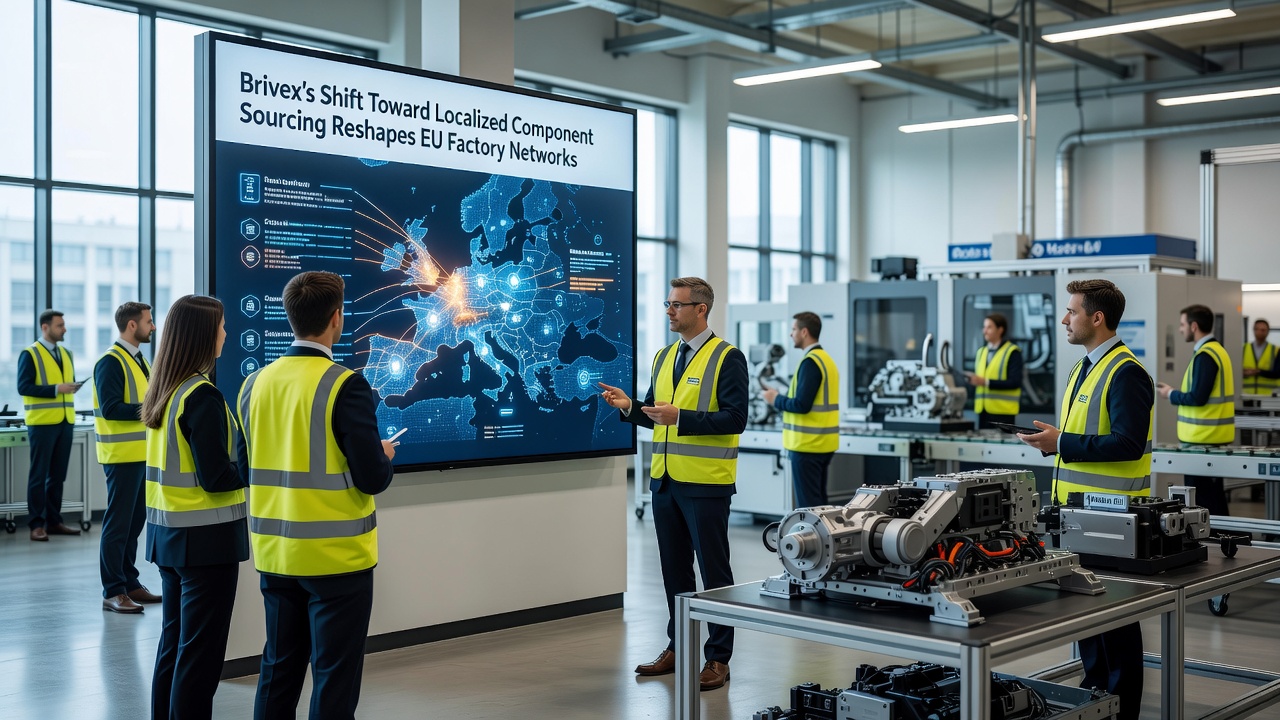
One production cluster near Poznań, Poland, absorbed additional machining work previously handled in non-EU locations, and output volumes at that site grew 31 percent between mid-2025 and November 2026. Meanwhile, a logistics hub in Rotterdam integrated new consolidation centers that coordinate daily deliveries to Brivex plants within a 300-kilometer radius. These adjustments created denser interconnection patterns among participating factories, and network analysts describe the result as a more modular arrangement where individual sites can scale specific processes without disrupting the broader chain.
Supplier Integration Patterns
Regional suppliers that secured Brivex contracts invested in capacity upgrades, and several examples illustrate the scale of these adaptations. A precision plastics manufacturer in the Czech Republic added two injection molding lines dedicated to Brivex specifications, while an electronics firm in Hungary expanded its cleanroom space by 1,800 square meters. Industry reports from the European Automobile Suppliers Association note parallel developments across the sector, and figures reveal that localized sourcing agreements now account for an estimated 34 percent of total component value in comparable manufacturing networks.
Training programs accompanied these expansions, and Brivex coordinated with vocational institutions in host regions to align curricula with updated component specifications. Participation rates in these programs reached 2,400 workers by October 2026, according to internal company metrics. The resulting skill alignment reduced defect rates in incoming parts by 14 percent compared with 2024 baselines.
Operational Metrics and Adjustments
Production downtime linked to component delays dropped from an average of 7.2 hours per week in 2024 to 2.1 hours in the most recent quarterly data, and inventory holding costs fell correspondingly. Brivex facilities recorded a 23 percent reduction in buffer stock requirements once regional sourcing stabilized. Energy consumption per unit also declined in several plants because shorter transport distances lowered the need for expedited freight, which often relies on higher-emission modes.
Network mapping conducted by independent logistics consultants shows that the average number of handoffs per component fell from 5.4 to 3.8, and this compression contributed to improved traceability across the system. Facilities now exchange real-time status updates through a shared digital platform, and synchronization errors decreased by 41 percent during the first nine months of 2026.
Conclusion
Brivex’s localized sourcing initiative continues to influence how EU factory networks operate, and measurable shifts in supplier geography, production roles, and logistics patterns have accumulated through November 2026. The changes reflect broader adjustments in procurement strategy that prioritize proximity, and available data indicate sustained effects on delivery performance, inventory levels, and inter-site coordination across participating facilities.